Stop slicing audiences—start changing decisions. These five fixes turn segmentation from a pretty map into measurable profit.
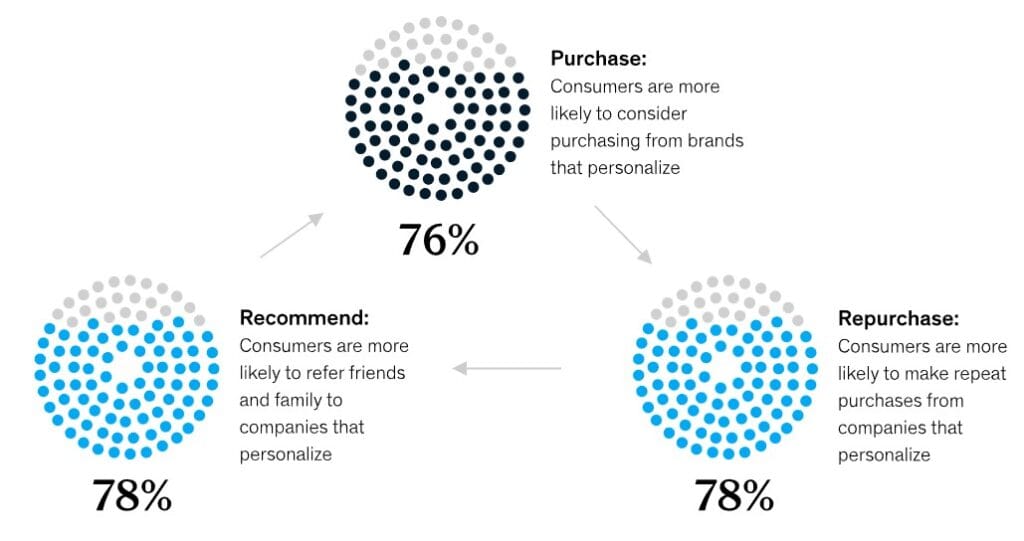
Most teams segment because they can, not because it changes what happens next. If your cohorts live in a slide deck, if channels don’t execute the same logic, or if you celebrate CTR while LTV slides, your segmentation isn’t strategy—it’s ornament. The goal is simple: convert behavioral data into next best actions that your systems deliver in minutes, then prove the lift with hard numbers. If you fix your segmentation, you will have better campaigns too.
Fix #1 — Start with RFM, not demographics
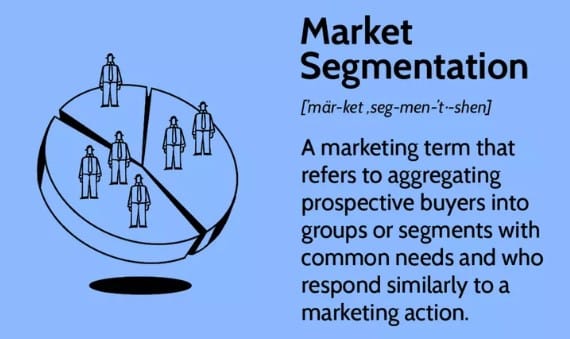
Fix 1 — Start with RFM, not demographics. Demographic cuts are stable but rarely actionable. Launch a clean 4×4×4 RFM baseline (recency, frequency, monetary value) to expose who is fresh, who is frequent, and who is valuable. This gives you an operational scaffold: which segments get stabilization, which need reactivation, and which deserve human attention. RFM won’t do everything—but it forces clarity, speed, and shared language across marketing, BI, product, and compliance.
Fix #2 — Make BI the engine, not the audience
Make BI the engine, not the audience. Segmentation fails when BI is just a dashboard. Unify CRM, web/app analytics, payments, and service data under one identity and consent layer; keep features fresh with event-driven pipelines; document lineage so legal and finance trust the output. When recency flips, the segment should flip, and the channel should react—no nightly lag, no manual exports. If data doesn’t move decisions, it isn’t an engine.
Fix #3 — Score scientifically, not by folklore
Score scientifically, not by folklore. Define time windows and normalize heavy-tailed spend (e.g., log(M)) before you set thresholds. Use percentiles or explicit business rules you can defend, then test weights rather than debating them—experiments decide whether monetary deserves 0.4 instead of 0.3. On large bases, layer clustering atop RFM and validate with silhouette/stability; retire clusters that can’t beat a simple RFM control on incremental revenue.
Fix #4 — Orchestrate one brain across channels
Fix 4 — Orchestrate one brain across every channel. Most “segmentation” dies in channel silos. The same decisioning should drive email (dynamic content), push/in-app (session-aware timing), web modules (risk tolerance, product mix), and even agent prompts—using one identity, one consent state, and consistent caps. That’s how you prevent fatigue, avoid contradictory offers, and keep the experience coherent enough to compound retention.
Fix #5 — Measure incrementality, not activity
Fix 5 — Measure incrementality, not activity. Clicks don’t pay salaries; profit does. Treat each segment and playbook like an experiment: hold out controls, track incremental GGR/NGR, ARPPU, reactivation rate, and LTV trajectory. Monitor a fatigue index that blends contact frequency with engagement decay so you can tighten caps before value burns. If a “winning” playbook lifts week-one revenue but harms week-four retention, it’s not winning—close the loop and fix it.
In iGaming and other high-velocity B2C, these fixes translate into practical knobs: pacing and volatility caps to stabilize high-value segments; soft nudges before incentives for early churn risk; game or product ranking that respects recent outcomes and tolerance; and responsible-use guardrails that protect both player and brand. Done right, segmentation becomes a living system—adaptive, explainable, and provably profitable.
Without segmentation, retention budgets drift to the loudest channels instead of the right customers. Harvard Business Review’s analysis makes the economics blunt: small retention gains → outsized profit gains. The path there isn’t “more messages,” it’s smarter cohorts—fresh, frequent, and valuable customers get stabilization; sliding recency gets reactivation; everyone else gets guardrails. That’s how retention stops being a slogan and starts compounding margin.
If you’re rebooting from zero, think in 90-day arcs: ship RFM in weeks with a minimal playbook per cell; wire channels to the same brain; add churn/upsell propensities once freshness and governance hold; then scale complexity only where experiments show real gain. The destination isn’t “more segments.” It’s fewer, smarter decisions—made faster—and a P&L that can prove it.