Ask anyone in CRM, and they’ll recite: “More customers. More often. Higher value. Longer lifetime.” It’s the classic CRM mantra… But what if the real benefits of CRM extend far beyond revenue? Sure, you can achieve that with sharp onboarding strategy, thoughtful VIP care, a solid retention rhythm, and a reactivation playbook, all supported by models like RFM, VIP tiers, and next-best-offer strategies. However, here’s the twist: great CRM compounds value far beyond short-term revenue spikes. That’s where the durable edge lies.
1) Loyalty
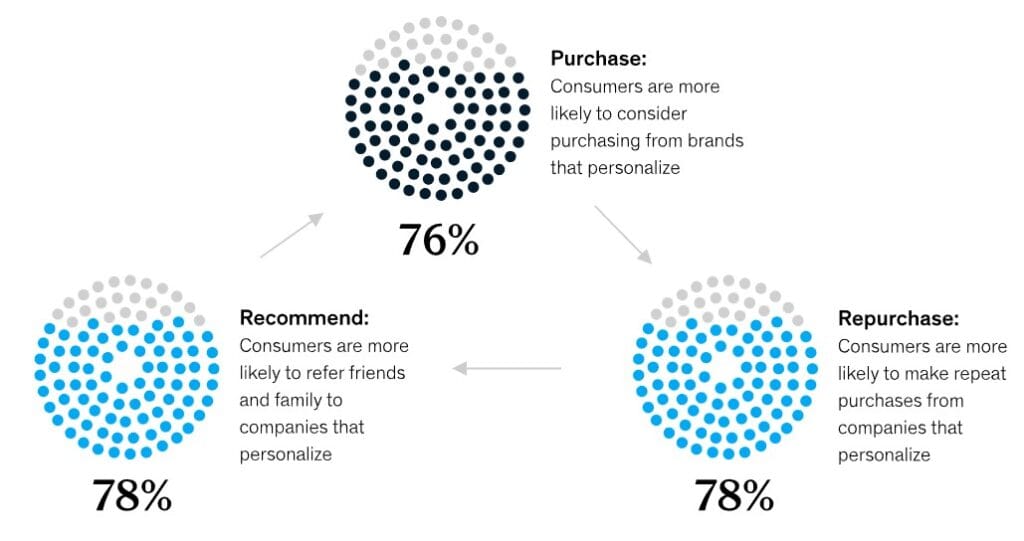
Based on McKinsey research, customers now expect personalization, and when brands deliver it consistently, they capture significantly more revenue—often around 40% more from personalization activities—than laggards. In other words, relevance isn’t a nice-to-have; it’s a growth engine.
For example, in iGaming loyalty doesn’t come from bigger bonuses but from fit: matching a player’s rhythm (weekend vs. weekday, league calendars), content (market types, bet sizes, casino volatility), and also value exchange (fast withdrawals, clear T&Cs, visible RG tools). When you get that fit right, you reduce friction, turn sessions into habit, and as a result extend lifetime. Therefore, measure it like a scientist: track 7/28-day return rates and net value with matched controls, rather than relying only on opens and clicks.
Loyalty metrics that can give you an edge:
Stickiness: don’t just track D7/D28 and call it a day. Add Stickiness (DAU/MAU) to see if you’re building habit (higher ratio) or just riding promo spikes.
Bonus-Dependency Ratio: Monitor the sessions with a redeemed bonus ÷ all sessions to spot discount reliance vs. true loyalty. If stickiness climbs while bonus-dependency falls, your CRM is working for the right reasons—and you’ve got a defensible advantage.
2) Advocacy
If you want proof that advocacy isn’t fluff, look at the evidence. Nielsen’s Global Trust in Advertising keeps finding that recommendations from friends and family are the most trusted influence globally (≈83–88% say they trust them), far ahead of most paid media. In the Journal of Marketing, a large-scale field study showed referred customers are at least ~16% more valuable than non-referred peers and churn less—so word-of-mouth doesn’t just add users, it improves unit economics.
And zooming out, Engagement Labs (with academic partners) estimates that about 19% of consumer sales are directly driven by online + offline conversations—impact that paid media alone can’t explain. So how do you get there? Treat advocacy as a designed outcome of CRM—not a happy accident. It’s a hidden benefit most teams underinvest in, yet it compounds quietly once you make it an explicit objective, measure it, and build journeys that earn recommendations.
Advocacy metrics that give you an edge:
Referral LTV vs. Non-Referral LTV: Compare 90/180-day cohort LTVs. If referrals are higher-value and stickier, your recommendation flywheel is adding quality, not just volume.
K-Factor (Invite Virality): Invites per user × invite conversion. >1 signals organic spread; <1 means growth is still paid-led.
3) Cross-Sell Breadth
Amazon’s recommendation system is credited with about 35% of purchases—proof that well-tuned suggestions can move real numbers. In iGaming, the pattern rhymes, operators consistently find that multi-product players (Sports and Casino) have materially higher future value—and in some datasets, ~50% higher than sports-only players—with better retention when cross-product adoption happens in the first 30 days.The trap? Many teams rely on “default” recommenders and generic triggers, then conclude “you can’t move casino ↔ sports.” In reality, if you measure your own signals (league gaps, volatility preferences, daypart patterns) and iterate the algorithm, you often unlock double-digit mix-shift that compounds loyalty—because breadth makes players stick.
Insight & cross-sell metrics that give you an edge
Product Breadth % (Mono → Dual). Percentage of users active in both Sports and Casino within 28 days. Breadth = stickiness; dual-vertical players retain and monetize better.
Time-to-Breadth (TtB-30): Median days from first activity to first session in the second vertical, because the faster players reach breadth, the higher their LTV tends to be. Tip: track TtB in onboarding cohorts; A/B test the moment (half-time prompts, post-withdrawal recs) to pull TtB down without heavy incentives.
Unlock the Full Potential of CRM
Yes, personalization pays—McKinsey’s work puts the upside near 40% more revenue for companies that truly master it. But companies win the long game when CRM also strengthens loyalty, fuels advocacy, and broadens product adoption. If you see stickiness climb while bonus-dependency falls, referred cohorts out-earn non-referred ones, and newcomers hit dual-product earlier, you’re building a brand that survives promotional weather. Measure those signals on purpose, and your CRM will serve strategy—not the other way around.